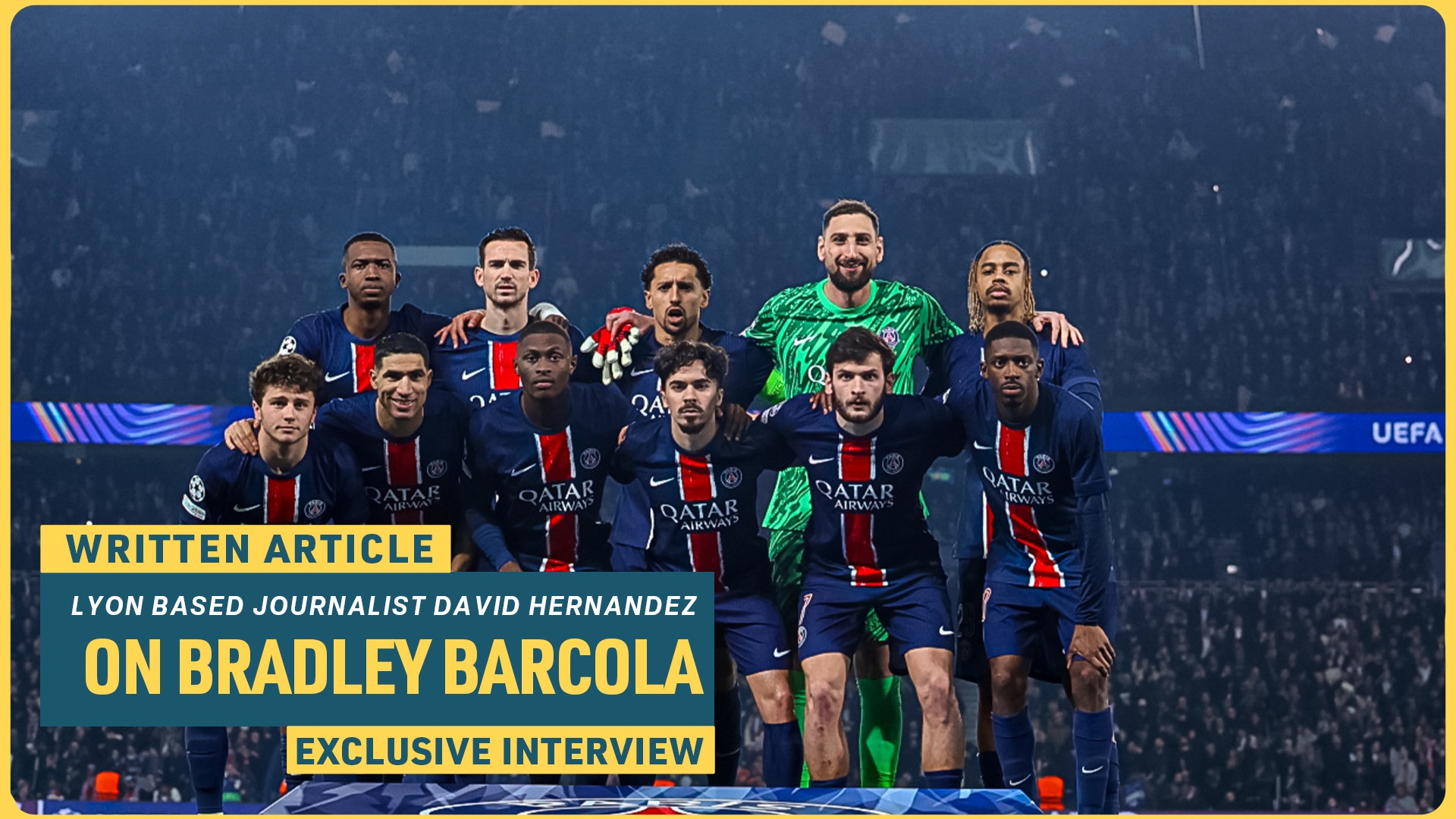
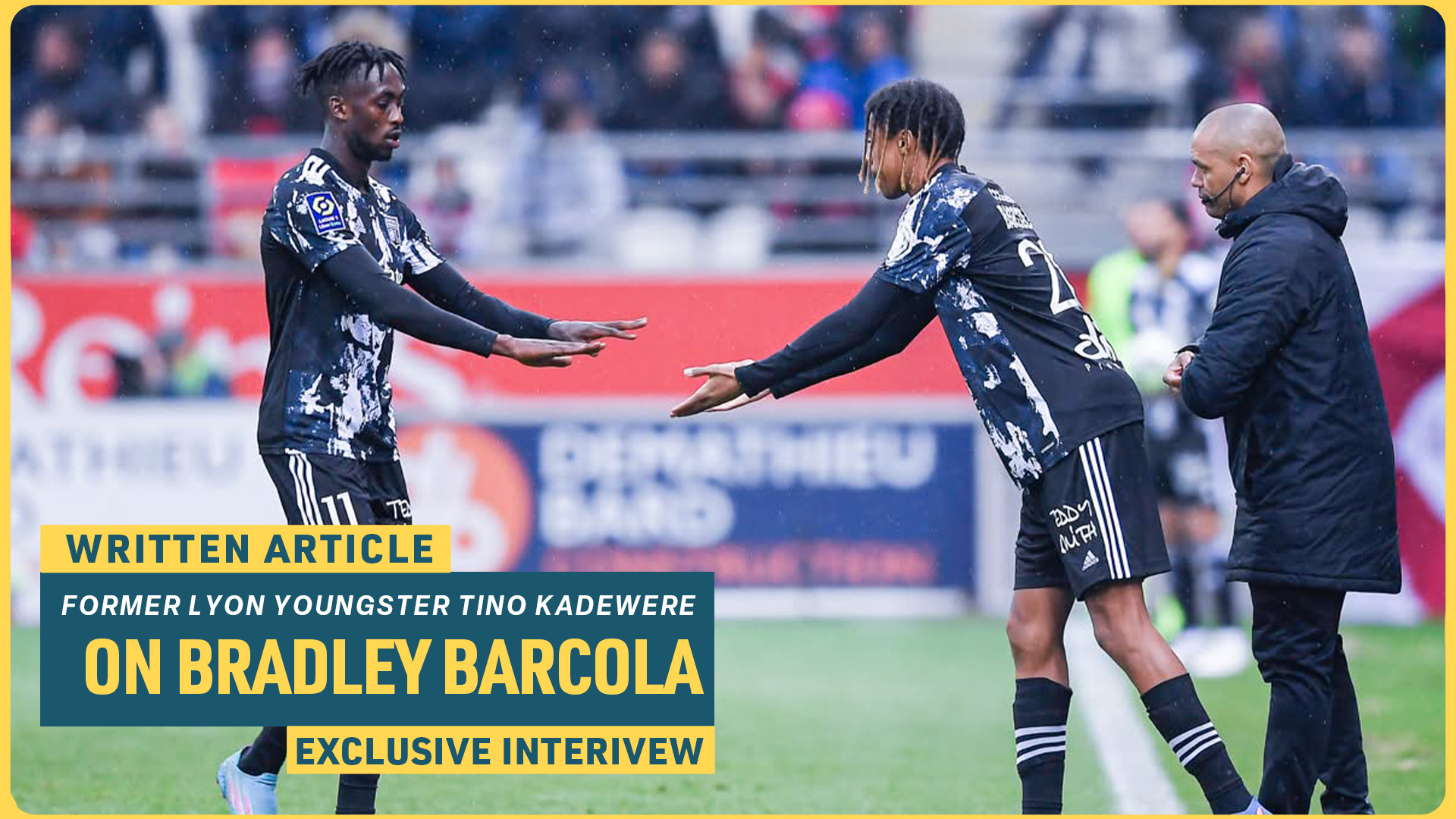
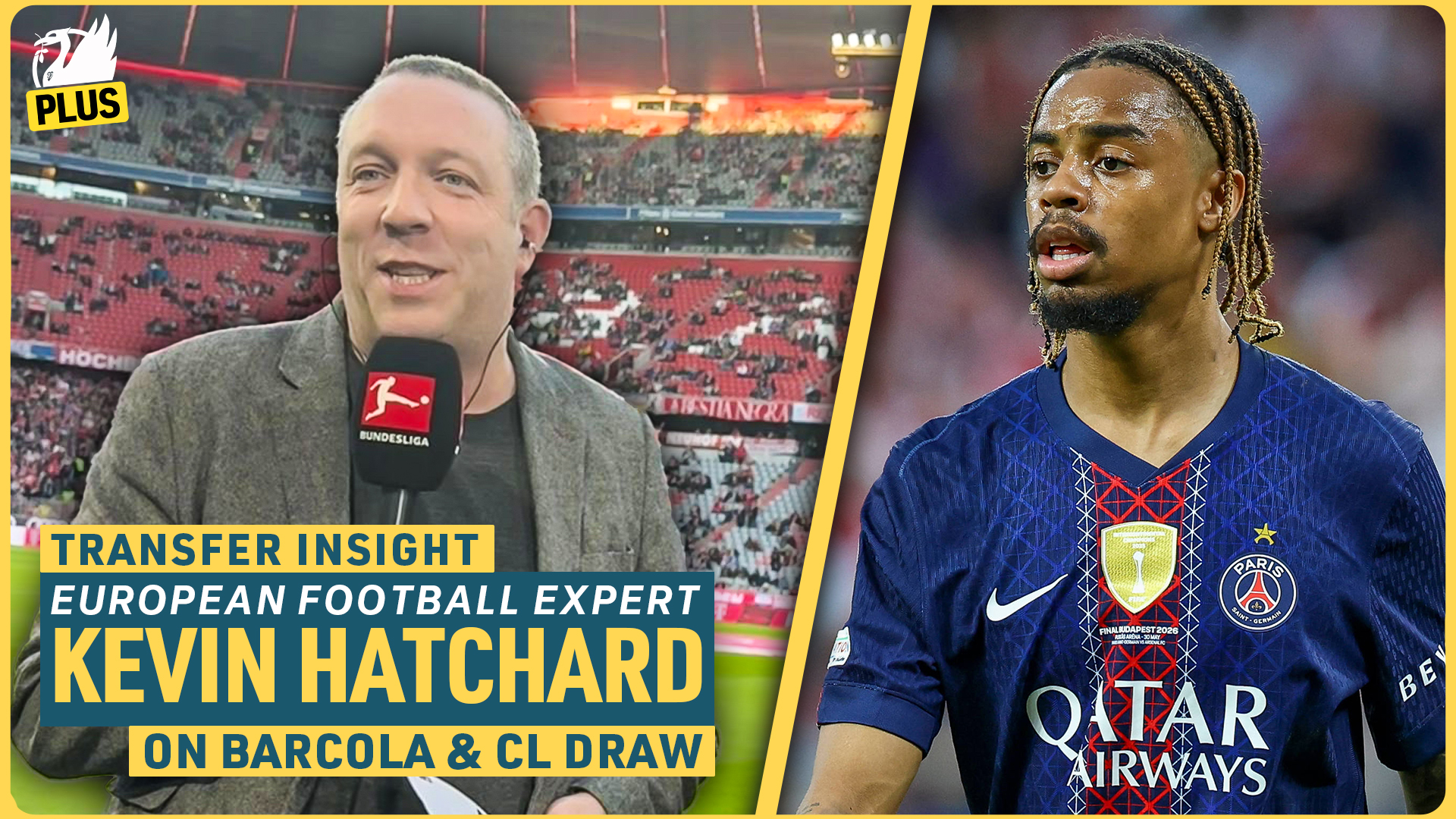
In this exclusive interview with Dan, esteemed Lyon acadrmy coach of 33 years Cyrille Dolche offers his insight into Bradley Barcola as a young player having worked directly and closely with him, looking at the qualities that first caught the eye, his development through the Lyon academy and the characteristics that ultimately allowed him to make the step into senior football.
We discuss Barcola’s technical and physical attributes, his mentality and personality, how his game evolved as he progressed through the academy, and whether there were early signs that he could go on to perform at the highest level.
With Barcola now established on the European stage, Dolche helps us look back at the player before the fame — and explain what made him stand out in the first place.
Bradley Barcola almost done…Will Liverpool sign one more?
What was your first impression of Barcola as a young player?
“Honestly, my first impression wasn’t of a player who jumps out at you. Bradley came through our academy from the age of eight, after starting out at A.S. Buers in Villeurbanne, and what struck me early on was his patience and his attitude — a genuine Lyon product, calm, hard-working, always smiling. He wasn’t the kind of kid who dazzles you in his very first training session. His story is one of construction, year after year, quietly, before everything accelerated at the right moment.”
Was Barcola considered an obvious elite prospect at that age, or did his development surprise people?
“He wasn’t seen as an obvious elite prospect, not at all. At the same age, Rayan Cherki had a much more immediately visible talent — technically precocious, decisive in matches straight away. Bradley, in the U15s, had a long, slender frame, still going through his physical transformation. He didn’t yet have the body for his football. So in many ways his development did surprise people outside the club. Internally we saw the raw materials, but nobody could have guaranteed he’d reach this level so early.”
When did you first think he had the potential to reach the very highest level?
“We sensed something in the U15s already — his speed, his ability to carry the ball forward, and above all his mentality: a hard worker, generous defensively, never a discipline issue. But real conviction came later. That opened a door for him, and he walked through it without hesitation. His first Ligue 1 goal followed almost immediately, and from there he never looked back.”
Was there anything particularly French about his football education — technically, tactically or physically?
“Yes, I’d say so. The French préformation model — the pôles espoirs, the club academies — puts huge emphasis on individual technical repetition alongside tactical understanding from a very young age, and on building the person as much as the player: discipline, humility, respect for the group. Bradley is a good example of that education. His attacking qualities were always there, but what the system also gave him was resilience — the ability to keep working even when he wasn’t the one getting the spotlight.”
Did Barcola stand out when surrounded by other elite French prospects, or did he need time to catch up?
“He needed time, clearly. Surrounded by players like Rayan Cherki, who had that early technical brilliance, Bradley wasn’t the one people pointed to first. He had to be patient and let his body catch up with his talent. That’s not a criticism — some players are ready early, others need an extra year or two, and Bradley is a perfect example of the second category.”
How highly was he regarded compared with players from his generation such as Rayan Cherki, Malo Gusto and Castello Lukeba?
“Within that generation, Rayan was probably the one earliest tipped for the very top, given how obvious his talent was. Malo and Castello were both very solid, reliable profiles who progressed steadily. Bradley was a little apart from that — less immediately eye-catching, more of a developing project. It’s striking that today he may be playing at the highest level of all of them, between PSG and the France squad. It shows you can never judge a generation too early.”
Barcola wasn’t always the physically imposing player we see today. How much did his physical development change his trajectory?
“Enormously. In his mid-teens, Bradley was long and slender, still growing into his frame — he simply didn’t have the physique to win duels or hold off defenders at a high tempo. Once his body caught up with his technical and mental qualities, everything he already had — the speed, the dribbling, the timing to attack space — became far more effective. His trajectory really changed the moment the physical side stopped being a limitation.”
Did he model his game on anyone?
“That’s one I’d rather answer carefully rather than attribute a specific reference to him. What I can say is that he was always his own type of player — quick, direct, more of a creator early on than an out-and-out finisher — rather than someone visibly copying a particular model.”
When Barcola was younger, what position did you see as his long-term position?
“Even as a young player, we always saw him as an attacking wide player — someone whose game was built on speed and one-on-one situations, better suited to playing off the flank and cutting inside than operating through the middle. That profile has stayed remarkably consistent as he’s developed.”
How good was his understanding of space when he was a teenager?
“It was there, but it developed gradually. What stood out earliest was his instinct for depth — his timing to attack the space in behind a defence. His broader understanding of how to occupy and exploit space across the width of the pitch, and his link-up play with teammates, came more with experience and with training at the highest level.”
What did he need to improve most before he was ready for senior football?
“Consistency in the final action, and physical strength in duels. He had the pace and the dribbling ability, but he needed the game to slow down for him mentally, and he needed his body to be strong enough to finish moves under pressure. That combination — physical maturity and composure in the final third — was really the last piece of the puzzle.”
Did you expect Barcola to adapt to PSG as quickly as he did?
“I wasn’t entirely surprised, because the qualities were already there — but I’ll admit the speed of it, becoming an important contributor so fast in that environment, was still impressive to see. What I always believed is that a demanding environment like PSG, surrounded by top-level players, was exactly what would push him to the next level. That’s exactly what happened.”
What has Barcola added to his game since leaving Lyon?
“He’s crossed a logical threshold. At PSG he operates in an environment of extreme demands, surrounded by very great players, and that has forced him to step up — notably in his consistency and his impact in decisive moments. You still find in him what I already saw in the U15s: that engine, that generosity, that hunger to improve. Today he’s gained in power, and in maturity in his decision-making, and his place with the France national team confirms that the potential we spotted early has fully materialised.”
VERY INTERESTING MOVE! – PSG JOURNALIST ON BRADLEY BARCOLA TO LIVERPOOL
Do you think his game would translate naturally to the Premier League?
“I’d answer that with a coach’s caution rather than certainty, since I haven’t worked with him in that context. But looking at his attributes — his pace, his directness, his work-rate without the ball — those are qualities that tend to travel well in fast, physical, intense football. I’d expect him to adapt, though every league naturally has its own demands.”
What did Barcola have to overcome that people don’t appreciate when they look at him now?
“The patience, above all. He was never the player who jumped out at you, and for years he watched others get the spotlight first while he kept working quietly in the shadows. There’s a phrase people used about him that I like a lot: ‘the patient Lyonnais.’ It sums him up well. Add to that a genuine physical transformation over several years, and a timid, humble personality that never once caused a problem — and you understand that his rise was built on a lot of unseen effort.”
You’ve seen a lot of young French attackers come through the system. Where does Bradley Barcola rank among the young players you’ve seen develop, and what is his realistic ceiling?
“I’m always careful with rankings, because every player’s path is different. What I can say is that Bradley is one of the clearest examples I’ve seen of patience paying off — a player who didn’t force things, who let his development happen at its own pace, and who is now performing at the top level in Ligue 1, the Champions League and with the French national team. As for his ceiling, I think there’s still room for him to grow, particularly in his decisive influence in the very biggest moments — but he has already shown he can handle the highest level, and that in itself tells you a great deal.”